
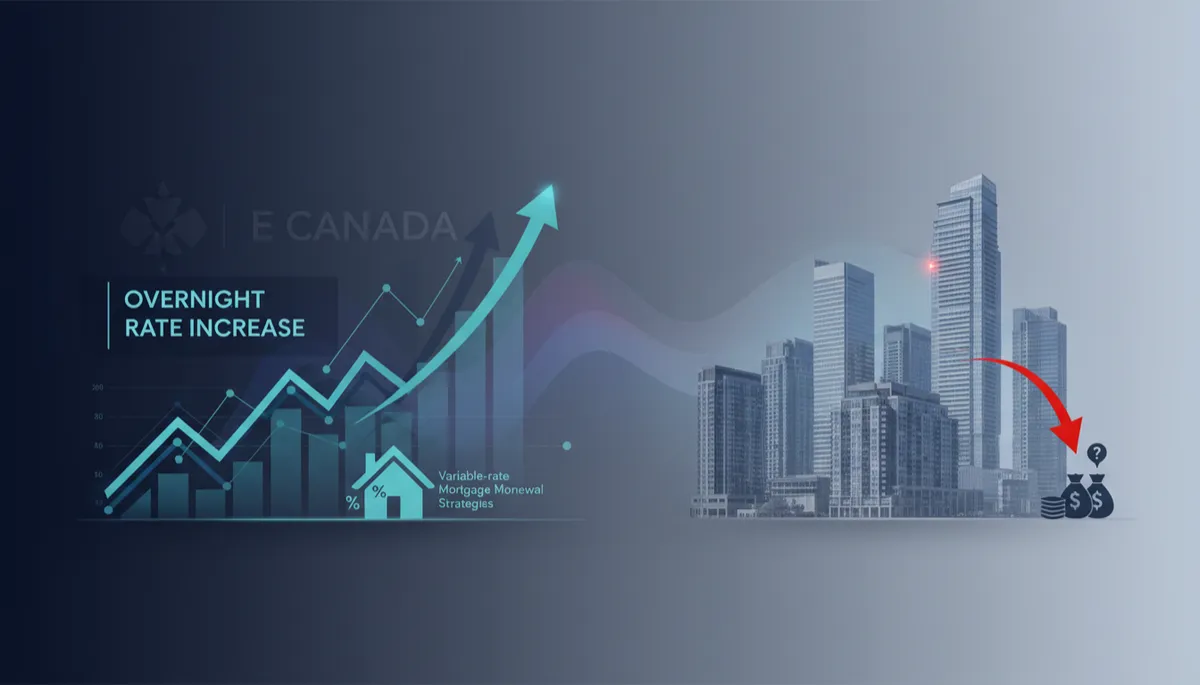
Bank of Canada Rate Hike: Impact on GTA Homeowners
Bank Of Canada, Overnight Rate Increase, Variable-rate Mortgage, GTA Housing Market, Mortgage Renewal Strategies, Inflation Impact
What the Bank of Canada’s October 28, 2026 Rate Hike Really Means for GTA Homeowners
On October 28, 2026, the Bank of Canada lifted its overnight rate by 0.25 percentage points to 2.5%. Headlines sound alarming, but the real impact on your variable-rate mortgage, upcoming renewal, or GTA home purchase is more nuanced. This guide breaks down the change in clear, practical terms so you can adjust your plan with confidence.
1. What the Bank of Canada Decided on October 28, 2026
On October 28, 2026, the Bank of Canada increased its target for the overnight rate from 2.25% to 2.5%. The Bank Rate now sits at 2.75%, and the deposit rate at 2.45%. This was the first increase since July 2023, and it came alongside the Bank’s Monetary Policy Report and a press conference with Governor Tiff Macklem and Senior Deputy Governor Carolyn Rogers ( Bank of Canada).
The move was widely expected by markets and a Reuters poll of economists, meaning much of the impact had already been priced into bond yields and, by extension, fixed mortgage rates. The Bank pointed to persistent inflation pressures, especially higher energy prices and risks from the Middle East conflict, as reasons for acting now rather than waiting for clearer data ( Canadian Mortgage Trends).
Governor Macklem acknowledged that the hike “is not going to feel good immediately.” Growth is already soft, with the Bank projecting about 1% for 2026 and 2% for 2027, and unemployment hovering near 6.5%. The Bank has signaled a meeting‑by‑meeting approach, with the next decision scheduled for December 9, 2026, and has left the door open to further increases if inflation does not cooperate.
2. Why Inflation Drove the Overnight Rate Increase
The core of this decision is the inflation impact. Consumer prices have been rising at roughly 3% annually since April, and the Bank expects inflation to reach about 3.5% by year‑end. In September, gasoline prices were 27.8% higher than a year earlier. Excluding gasoline, inflation was 2.2%, and core measures sit near 2%, close to the Bank’s target range.
The concern is not only current energy prices, but the risk that those costs “spill over” into the broader economy—raising the prices of goods, services, and shelter. By nudging the overnight rate higher, the Bank of Canada is trying to cool demand just enough to keep inflation expectations anchored, without tipping the economy into a deeper slowdown. For households, this balancing act shows up as slightly higher borrowing costs layered on top of already elevated living expenses.
📌 Key Takeaway: The rate hike is an “insurance policy” against inflation becoming entrenched. It is not meant to crash the economy, but to prevent today’s higher energy costs from turning into tomorrow’s across‑the‑board price surge.
3. How the Rate Hike Hits Variable-Rate Mortgages and Lines of Credit
The first place most households will feel the overnight rate increase is on variable-rate mortgages and home equity lines of credit (HELOCs). Lenders are expected to raise their prime rate by the same quarter point, from 4.45% to 4.70%. Ratehub estimates the lowest five‑year variable rate will move from about 3.45% to roughly 3.70%.
On a $500,000 mortgage amortized over 25 years, that 0.25‑point change adds approximately $67 per month in payments, assuming monthly compounding. If your variable‑rate mortgage has an adjustable payment, your monthly cost will rise. If you hold a fixed‑payment variable, your payment may stay the same, but more of it will go to interest and less to principal, slowing your payoff.
💡 Pro Tip: Check whether your variable-rate mortgage is adjustable‑payment or fixed‑payment. The difference determines whether your monthly cash flow changes now or whether the impact shows up as slower principal reduction and a higher balance at renewal.
4. Fixed-Rate Mortgages, Bond Yields, and Mortgage Renewal Strategies
Fixed‑rate mortgages do not move in lockstep with the Bank of Canada. Instead, they track Government of Canada bond yields, especially the five‑year yield. On October 6, the five‑year Government of Canada yield was 3.59%, up from 2.75% a year earlier. As a result, many fixed rates had already climbed before the October 28 decision. Ratehub reported the best five‑year fixed rate at about 4.34% on announcement day.
For homeowners approaching renewal, this is where mortgage renewal strategies matter more than the headline overnight rate increase. The key questions are:
How does your current rate compare with today’s fixed and variable options?
Can your budget handle a rate 1 percentage point higher than today’s quote, if the Bank of Canada hikes again in early 2027?
Do you value payment stability (fixed) more, or potential savings if rates fall later (variable)?
Three Practical Renewal Tactics to Consider
Stress-test your own mortgage. Ask your lender or broker to quote payments at today’s rate and at a rate one full point higher. If both fit your budget, you are renewing with a margin of safety.
Compare fixed vs. variable over the full term. A variable rate may start lower, but if the Bank of Canada follows through with another hike in early 2027, your total interest cost could converge with, or exceed, a well‑priced fixed option. Run the numbers over five years, not just month one.
Negotiate, do not auto‑renew. Lenders often lead with conservative offers. Use competing quotes, or work with a broker like the A.B.R.E. Team at REMAX Your Community Realty, to improve your renewal terms.

5. The GTA Housing Market: A Quiet Backdrop to a Noisy Headline
To understand how this overnight rate increase may shape the GTA housing market, it helps to see where the region stood before the announcement. According to TRREB’s September 2026 data, there were 5,040 sales across the GTA, down 9% from a year earlier. The average selling price was $1,006,409, compared with $1,060,036 a year earlier, and the MLS HPI benchmark price was down 4.7% ( TRREB).
New listings fell 14.4% to about 16,500, and the sales‑to‑new‑listings ratio sat near 38%, signaling a market that leans slightly toward buyers but is not distressed. Months of inventory hovered around 4.6, and homes sold for roughly 98% of their list price. In other words, the GTA market was already quiet and cautious before the Bank of Canada moved, with both buyers and sellers waiting for clearer direction.

Three Possible Paths for the GTA After the Rate Hike
The wait continues. With borrowing costs rising again, some buyers may stay on the sidelines. If demand remains muted, sales could stay slow, and prices may drift sideways or soften further, particularly in segments that saw the sharpest gains during the pandemic years, such as condos and entry‑level townhomes.
Supply stays thin. New listings are already down 14.4%. If potential sellers keep holding off, active inventory may remain constrained. In that environment, well‑priced, move‑in‑ready properties—especially in family‑friendly neighborhoods and near transit—can still attract multiple offers, even as overall sales volumes decline.
The next move depends on the Bank. CIBC expects a hold in December and one more 0.25‑point hike in January, while major bank forecasts range from a peak of 2.75% (TD, CIBC, BMO) to 3.25% (RBC, Scotiabank) by the end of 2027. Economist Andrew DiCapua has described the October move as an “insurance” hike, suggesting the Bank could be patient from here. If the Bank signals that it is close to done, bond yields and fixed mortgage rates may stabilize, offering the GTA market a clearer runway into spring 2027.
6. If You Are a Buyer: Structuring an Affordable, Resilient Plan
1. Stress-test your budget at today’s rate and +1%. Ask your lender to show your payment at the current quote and at a rate one percentage point higher. If both scenarios fit within a conservative budget, your plan is better insulated from additional overnight rate increases.
2. Compare fixed and variable over the full term. A variable-rate mortgage may look more attractive initially, but you should weigh the risk of further hikes. Use a simple calculator—or a small script like the one above—to estimate total interest paid over five years under different rate paths. This is particularly important for first‑time home buyers, who often have less financial buffer.
3. Use today’s slower pace to your advantage. With sales and new listings both down, you may have more time to compare properties, conduct inspections, and include financing and status‑certificate conditions—especially in condo purchases—without losing out as quickly as in earlier, overheated markets.
7. If You Are a Seller: Pricing and Strategy in a Higher-Rate World
1. Price against recent sales, not last year’s peak. Buyers now qualify at higher stress‑test rates, which reduces what many can borrow. Anchor your listing price to the last 30–90 days of comparable sales in your micro‑area, not to 2025 peak prices or a neighbor’s aspirational list price.
2. Leverage limited supply with strong presentation. With new listings down 14.4%, a well‑prepared property—decluttered, staged, professionally photographed—can still stand out. In a market where buyers are cautious, trust and transparency matter; pre‑listing inspections and clear disclosure can differentiate your home.
3. Remember your next mortgage is at today’s rate. If you are selling and buying within the GTA, the rate you pay on your new mortgage will reflect today’s environment, not the lower rate on your existing loan. Work through your full move‑up or right‑size scenario with a professional so that the combined sell‑and‑buy math still advances your long‑term plan.
8. If You Are an Investor: Rebuilding the Cash Flow Model
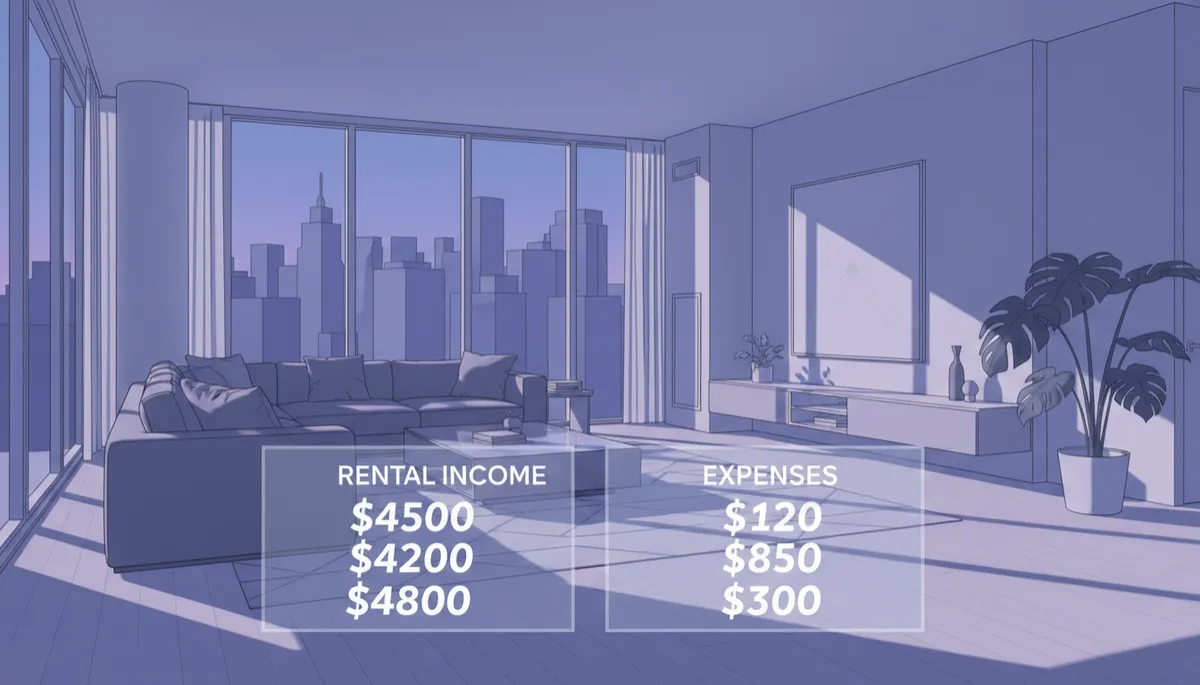
1. Recalculate at your renewal rate, not your current rate. Rent in the GTA is rising at about 2.8% annually, but borrowing costs are rising too. A property that works at 3.5% financing may look very different at 4.5% or higher. Update your cash flow projections using realistic renewal assumptions and include maintenance, insurance, and property tax increases.
2. Check your margin for error. If your investment only makes sense assuming falling rates, your risk buffer is thin. Look for properties that still generate acceptable returns under conservative rate assumptions, and treat any future rate cuts as upside, not a requirement.
3. Watch for motivated sellers, but stay disciplined. Some owners facing renewal at higher rates may be more flexible on price. Focus on assets where the numbers work today, in realistic scenarios. The combination of softer prices, modest rent growth, and disciplined underwriting can create opportunities for long‑term investors.
9. Method, Limits, and Why Local Advice Still Matters
The figures and scenarios in this article draw on the Bank of Canada’s October 28, 2026 press release and Monetary Policy Report, coverage from Global News, MoneySense with Ratehub commentary, CP24’s reporting on TRREB’s September 2026 Market Watch, and GTA market analyses from TRREB and other public sources. Prime and variable‑rate figures reflect lender expectations immediately after the decision; your lender’s actual rates may differ, and they can change quickly as funding costs move.
Bank forecasts regarding the overnight rate path into 2027 are informed opinions, not guarantees. Similarly, GTA housing projections from firms like Royal LePage, Homies AI, and others are scenarios, not certainties. This article is general information, not mortgage, tax, or investment advice. Your income stability, time horizon, debt level, and risk tolerance all matter as much as the Bank of Canada’s overnight rate.
10. What to Do Next: Walk Through Your Numbers with a Professional
The October 28, 2026 overnight rate increase to 2.5% will not affect every GTA household in the same way. A first‑time buyer with a modest condo budget, a family renewing a variable‑rate mortgage on a detached home, and an investor holding multiple rental units all face different trade‑offs. What they share is the need for clear, data‑driven planning anchored in their own numbers, not just in headlines about the Bank of Canada.
If you are unsure how the new rate changes your plan—whether you are buying, selling, renewing, or investing—A.B.R.E. Team with REMAX Your Community Realty can help you translate policy decisions into practical next steps. The conversation starts with your budget, your time horizon, and your goals, then layers in the realities of today’s GTA housing market and current mortgage products.
Talk to Ali about your next move: Ali Bolourchi, BSc, MS, PSA, ABR®, Broker of A.B.R.E. Team with REMAX® Your Community Realty Inc., Brokerage* (each office independently owned and operated). Phone: 416‑886‑2000 · Website: https://ali.realtor · Address: 8854 Yonge Street, Richmond Hill, ON L4C 0T4.