Global Turbulence: Impact on Homebuyers
Global Economy, Housing Market, Cost of Living
War, Tariffs, and Hunger: How Global Turbulence Threatens Everyday Homebuyers
From the Persian Gulf to grocery shelves in Toronto, the world’s overlapping crises are reshaping how far every dollar goes. For first-time buyers and families trying to secure a stable home, understanding these forces is no longer optional—it is essential.
A World on Edge—And What It Means for Your Wallet
The news cycle can feel distant: missile strikes in the Persian Gulf, tariff battles between major economies, warnings from the World Food Programme about hunger hotspots. Yet these events are tightly connected to the price of fuel, food, and financing here at home in the Greater Toronto Area (GTA). For first-time home buyers and cost-conscious families, they directly influence mortgage rates, rent levels, and how much remains in your budget after groceries and utilities are paid.
At Affordable Homes and Condos - Ali Bolourchi Real Estate (A.B.R.E.) Team, we follow these global trends closely because they shape the local housing landscape. Our goal is not to alarm you, but to equip you with clear, practical insight so you can make confident decisions even when the world feels uncertain.
1. The Continuing Conflict in the Persian Gulf and Western Asia
The Persian Gulf remains one of the most strategically important—and fragile—regions on earth. In mid-September 2026, tensions escalated once again. Iranian state media reported a deadly strike on a commercial vessel near Qeshm Island in the Strait of Hormuz, a vital chokepoint for global oil shipments. In the same period, the United States and Iran exchanged multiple blows, including the destruction of Iranian oil tankers and retaliatory attacks on U.S. assets in the region.
The Strait of Hormuz is narrow, but its importance is massive. At the peak of the 2026 crisis, exports through the Strait dropped to around 300,000 barrels per day. Thanks to U.S. military operations, flows have partially recovered to over 8 million barrels per day from Gulf countries, and about 10.8 million when including alternative routes. Even so, the waterway is operating “under duress”: Iran has announced new maritime “exclusion zones,” seized equipment, and warned commercial vessels, while the U.S. has reinforced its naval presence and issued security advisories for ships crossing the area.
Diplomacy has struggled to keep pace. A June memorandum of understanding that briefly reduced tensions is no longer being followed. Mediation attempts, including those led by Pakistan, have failed to produce a lasting ceasefire. For Gulf states whose economies depend on secure maritime routes, this ongoing confrontation creates a constant backdrop of risk. And whenever risk rises in oil-producing regions, the consequences ripple across the globe in the form of higher energy prices and greater volatility in financial markets.
How Gulf Tensions Translate Into Everyday Costs
When shipping lanes are threatened by missile strikes, drones, and naval blockades, insurers raise premiums on tankers, shipping companies factor in detours or delays, and oil markets react almost instantly. Even if Canada is not directly involved in the conflict, global oil benchmarks influence what we pay at the pump, how much it costs to transport food across the country, and even what it costs to manufacture building materials like asphalt and roofing products.
For aspiring homeowners in the GTA, that means:
Higher fuel and heating costs, which increase the overall cost of living and squeeze the portion of income available for saving a down payment.
Upward pressure on construction and renovation costs, potentially affecting new-home prices and the cost of updating older properties.
Greater uncertainty in financial markets, which can influence mortgage rates as central banks balance inflation risks with growth concerns.
📌 Key Takeaway: Conflict in the Persian Gulf is not just a geopolitical headline—it is a key driver of energy costs that shape monthly budgets for Canadian households.
2. Tariff Wars and a Global Economy on the Brink
At the same time, major economies continue to deploy tariffs as tools of economic pressure and political leverage. While each new measure may appear targeted—on steel here, agricultural products there—the combined effect is a tangled web of trade barriers that disrupts global supply chains and drags on growth. The experience of the U.S.–China trade war showed how quickly tariffs can raise costs on hundreds of billions of dollars’ worth of goods, ripple across industries, and slow global economic activity.
When tariff wars intensify, the global economy faces several overlapping risks: disrupted trade routes, delayed shipments, reduced investment, and higher prices for both raw materials and finished goods. The World Bank and other institutions have repeatedly warned that prolonged trade tensions can hinder recovery, increase volatility, and undermine confidence for businesses and consumers alike. In a world already shaken by energy insecurity and regional conflicts, tariff escalations can act as a multiplier, pushing fragile economies closer to recession and putting jobs at risk.
Tariffs, Inflation, and the Cost of Housing
For households in the GTA, the most visible impact of tariff wars is often inflation. When imported goods—from appliances and electronics to lumber and fixtures—become more expensive, builders and renovators must pass some of those costs on to buyers. This can show up as higher prices for new condos, larger quotes for kitchen renovations, or steeper costs for essential household items when you finally get the keys to your first place.
In response to sustained inflation pressure, central banks may raise interest rates to cool demand. While this can eventually help stabilize prices, it also makes borrowing more expensive in the short term. For first-time buyers, even a small increase in mortgage rates can significantly reduce purchasing power or increase monthly payments. Combined with other cost-of-living pressures, this can make the dream of homeownership feel further out of reach, especially for those focused on affordable options.
💡 Pro Tip: In a volatile rate environment, consider getting pre-approved and exploring rate-hold options. The A.B.R.E. Team can connect you with mortgage professionals who understand the unique challenges facing first-time buyers today.
3. Hunger Looms: When Food Insecurity Meets Household Budgets
The global hunger picture is complex. According to the 2026 State of Food Security and Nutrition in the World report, about 7.8% of the world’s population—roughly 645 million people—faced hunger in 2025. That is a slight improvement from previous years, but the progress is fragile and uneven. While some regions are recovering, Western Asia and several conflict-affected areas are seeing hunger rise. The World Food Programme estimates that 266 million people are in crisis-level acute hunger or worse, and 41 million are in emergency conditions.
Conflict remains the primary driver of hunger, accounting for about 70% of acute food insecurity cases. The same Middle East escalation that threatens oil flows also pushes up food, fertilizer, and transportation costs. WFP modelling suggests that if oil prices stay above USD 100 per barrel, as they often do during severe Gulf crises, tens of millions more people could slide into acute hunger. Meanwhile, humanitarian funding has dropped dramatically—nearly 59% between 2022 and 2025—leaving aid agencies with fewer tools to respond just as needs are growing.
From Global Hunger to Local Grocery Bills
In Canada, we may not face famine, but we are not insulated from these pressures. Higher fuel prices and disrupted supply chains drive up the cost of transporting food. Weather shocks linked to El Niño and climate change affect crop yields worldwide, contributing to tighter supplies and higher prices for staples like grains and vegetable oils. When major exporters restrict shipments or when importing countries raise tariffs in response to economic shocks, the global food system becomes even more fragile.
For individuals and families in the GTA, this shows up at the checkout line. Groceries claim a larger share of monthly income, particularly for lower- and middle-income households. Renters may find that after paying for food, transit, and utilities, there is little left to save for a down payment. Homeowners may struggle to keep up with mortgage payments if food and energy bills keep climbing. The result is a quiet, persistent squeeze that can feel just as stressful as a sudden rate hike or job loss.

Rising food costs quietly erode savings that could have gone toward a first home.
The Triple Squeeze on Individuals and Consumers
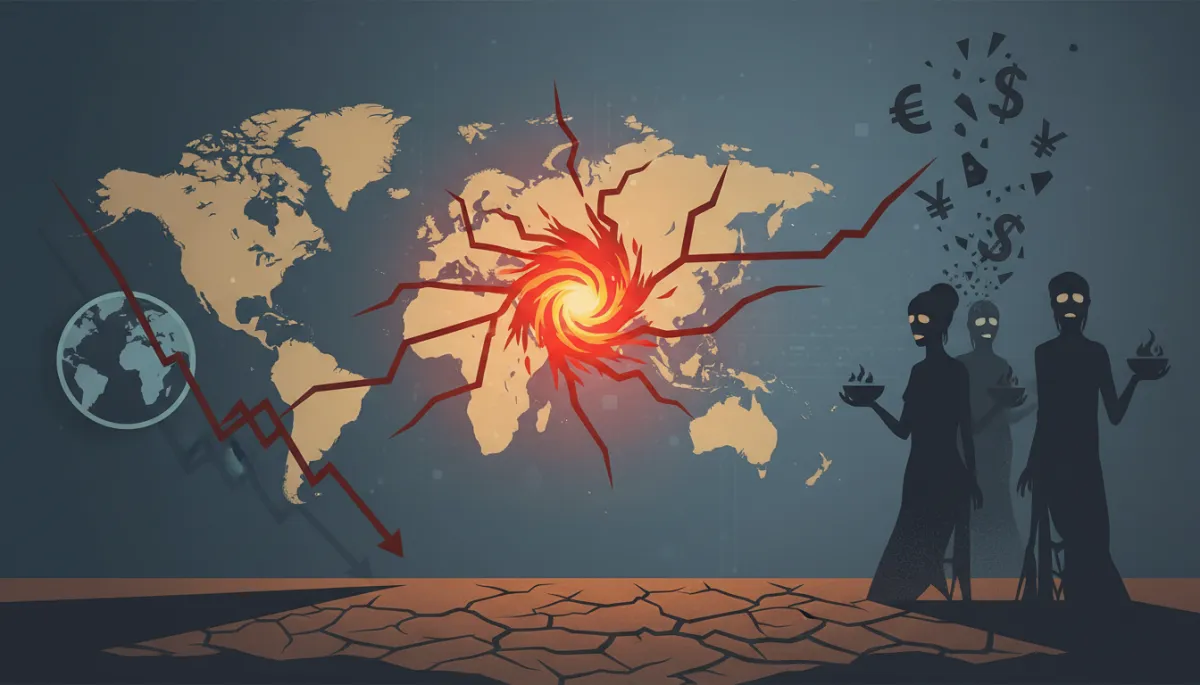
Put together, the continuation of war in the Persian Gulf and Western Asia, ongoing tariff conflicts, and mounting hunger risks create a “triple squeeze” on everyday people:
Energy and transportation costs rise due to conflict-driven oil volatility, affecting everything from commuting to home heating.
Goods and materials become more expensive as tariff wars disrupt trade, pushing up the price of building supplies, appliances, and household essentials.
Food and basic necessities claim a larger share of income as global food systems strain under conflict, climate shocks, and funding shortfalls.
For individuals, this triple squeeze can feel like an invisible tax on daily life. Paycheques do not stretch as far. Budgets feel tighter even if income has not changed. Savings plans stall just as housing prices and borrowing costs demand more financial discipline. It is no surprise that many first-time buyers in the GTA are asking whether they should pause their home search, downsize their expectations, or look for more affordable communities and property types.
Turning Global Uncertainty into Local Strategy
While no individual can control global conflicts or trade policy, you can control how you respond. The key is to translate big-picture risks into practical, local strategies that protect your financial stability and keep your housing goals within reach. This is where a real estate team grounded in transparency, data, and digital innovation can make a meaningful difference.
1. Budget for Volatility, Not Just for Today
When planning a home purchase, many buyers focus on the mortgage payment alone. In a world of fluctuating energy and food prices, it is wiser to think in terms of total cost of living. That means stress-testing your budget against higher grocery bills, increased transit or fuel costs, and potential interest rate changes. A slightly more modest home today can be far more comfortable—and sustainable—than stretching to your absolute maximum in a period of global uncertainty.
2. Prioritize Energy-Efficient and Well-Located Homes
If conflict keeps energy markets volatile, homes that are energy-efficient or well-connected to public transit can help shield you from future cost spikes. A condo with good insulation, modern windows, and efficient heating can reduce monthly bills. A unit near reliable transit may allow you to own one car instead of two—or none at all—freeing up hundreds of dollars each month. Over time, those savings can offset a slightly higher purchase price and make your finances more resilient to global shocks.
3. Use Digital Tools to Compare True Affordability
In a complex environment, clarity is power. The A.B.R.E. Team leverages digital innovation to help clients compare not only listing prices, but also estimated carrying costs, commute times, and neighbourhood expenses. By looking at affordability through multiple lenses—mortgage, utilities, transportation, and even likely condo fees—we help you see which properties will remain comfortable as the global economy shifts, not just which ones you can technically qualify for today.
4. Stay Informed Without Becoming Overwhelmed
It is easy to feel paralyzed by constant headlines about war, tariffs, and hunger. Yet informed decisions do not require tracking every development. What matters is understanding the main channels through which global events affect your life: interest rates, inflation, employment, and local housing supply. We translate complex macroeconomic news into clear guidance on when to act, when to wait, and how to structure offers and conditions to protect your interests.
📌 Key Takeaway: You cannot control global crises—but with the right information and support, you can still move forward confidently toward homeownership.
How the A.B.R.E. Team Helps You Navigate an Uncertain World
Affordable Homes and Condos - Ali Bolourchi Real Estate (A.B.R.E.) Team was built around a simple promise: to blend digital innovation with deep market expertise so clients can make clear, confident decisions—even when the broader world feels anything but clear. Our focus on affordable homes and condos in the GTA is intentional. In a time when global shocks are making housing less accessible for many, we believe that transparency, education, and tailored strategies are more important than ever.
Transparency: We explain not just what is happening in the market, but why—from interest rate movements to energy-driven cost pressures—so you can see the full picture behind each recommendation.
Client empowerment: Our free guides and tools are designed to put you in control, helping you understand trade-offs between location, size, and monthly costs instead of pushing you toward the highest possible purchase price.
Digital innovation: From online affordability calculators to virtual tours and data-driven neighbourhood comparisons, we use technology to save you time and give you sharper insight.
Taking Your Next Step: From Global Risk to Personal Resilience
The continuation of war in the Persian Gulf and Western Asia, intensifying tariff disputes, and a looming global hunger crisis are reshaping the economic landscape in ways that touch every household. Yet your response does not have to be fear or paralysis. By understanding how these forces influence energy prices, inflation, and interest rates, you can make smarter, more resilient choices about when and where to buy, what you can comfortably afford, and how to protect your long-term financial well-being.
If you are considering your first home or looking for an affordable condo in the GTA, now is an ideal time to get clarity on your options rather than waiting for “perfect” conditions that may never arrive. With the right guidance, it is still possible to secure a stable, comfortable home that fits your budget—even in a world facing profound challenges.
Ready to Explore Your Options?
Take the free First-Time Home Buyer Eligibility Quiz to quickly see where you stand and what price range may be realistic in today’s market.
Browse affordable homes and condos across the Greater Toronto Area, filtered to match your budget and lifestyle needs.
Download our free buyer’s and seller’s guides for step-by-step advice on navigating financing, inspections, offers, and more in a volatile economic climate.
Contact the A.B.R.E. Team for personalized support grounded in transparency, data, and a deep commitment to your long-term success.
Global turbulence may be beyond your control, but your housing decisions do not have to be. With a clear understanding of how war, tariffs, and hunger intersect with your daily life—and with a trusted partner by your side—you can still move toward a future defined not by uncertainty, but by stability, security, and a home that truly works for you.